
 yuka
yuka People often say, “Kanazawa is like little Kyoto.”
Yes, both cities have beautiful traditional buildings and a rich history. But there is an important difference.
The biggest difference is between “Emperor culture” and “Samurai culture.”
Emperor Kyoto vs Samurai Kanazawa
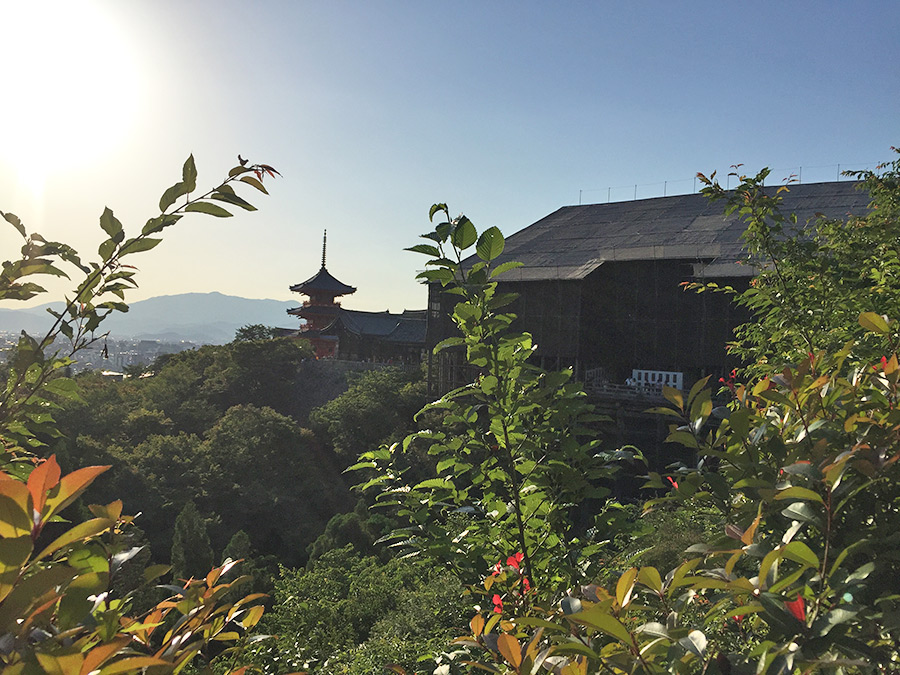
Kyoto is the city of the Emperor. It was the capital of Japan for over 1,000 years, so it was the center of the Imperial Court. Kyoto’s culture is about elegance and a refined lifestyle. The city was designed in a perfect grid, like ancient Chinese cities, or Manhattan in NYC. This organized design showed the Emperor’s power and a very structured society. You will encounter so many temples and shrines, and some of them are really big and well-known ones. Because emperors built those temples and shrines to make the whole country safe, by drawing on the power of religion.
Kanazawa is the city of Samurai. It was never the capital. It was the home of one of the most powerful samurai clans, the Maeda family. When you look at temples in Kanazawa, the design is often simpler rather than elegant, because simplicity is the spirit of Samurai. The city layout is not a grid at all. It’s complicated and sometimes confusing. This was intentional. The complicated streets were designed to confuse enemies who might try to attack the castle.
When I moved to Kanazawa 30 years ago, this city layout really confused me. I was afraid to drive for a while. I got lost easily, and I sometimes accidentally went into one-way streets.
Hey, I’m not your enemy.
I’m not trying to attack the castle!
Kyoto and Kanazawa are different but there are some similarities
Kyoto and Kanazawa are different, but both value culture and tradition. If you feel the similarity, it is because both cities share old streets and traditional culture.
Luckily, both Kyoto and Kanazawa were not damaged by WWII. Some big cities were destroyed and rebuilt from scratch, but old streets and some buildings still remain in Kyoto and Kanazawa.
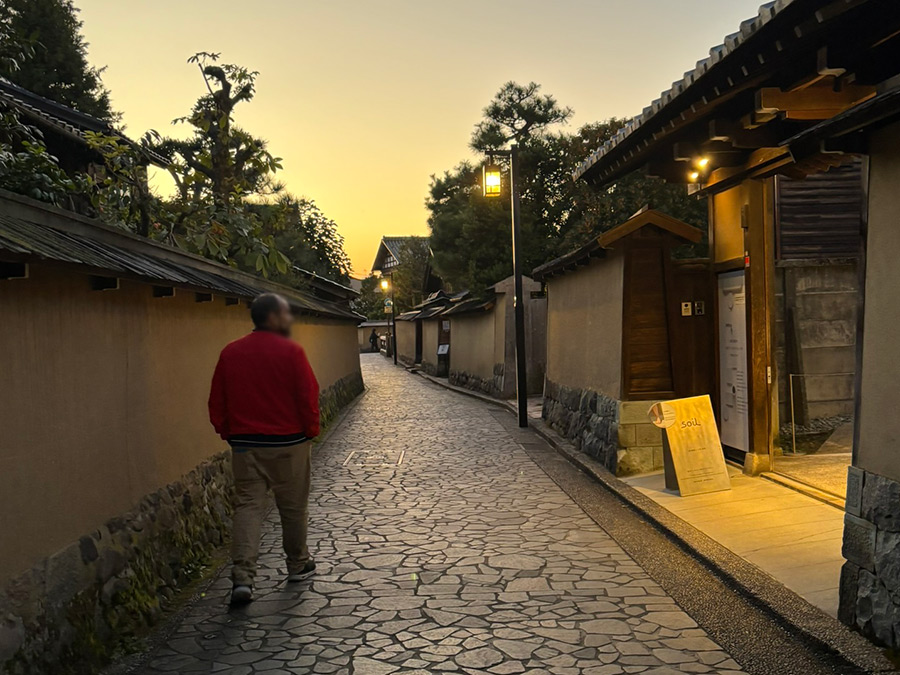
For example, the old samurai district called Nagamachi Samurai District still has narrow lanes, clay walls, and traditional gates. Walking there gives you a sense of how samurai families lived in the past. The streets reflect the defensive design of the city. Teramachi is also an interesting area. There are almost 100 temples, and used to be a defensive area for the Castle.
Maeda clan was the second richest feudal family after the Tokugawa Shogunate during the Edo period. Shogunate was very suspicious toward Maeda clan. So, Maeda spent their wealth on crafts, tea ceremony, Noh theater, and all things beautiful instead of weapons, showing “we’re so in love with beautiful things, and not going to attack you”. Maeda encouraged not only samurai but also townspeople to learn these arts. It became deeply rooted in the local culture.

There is one more interesting thing. If you look at the number of universities per person, Kyoto Pref. is number one in Japan, and Ishikawa Pref. is number two. So I think these two places share another important value, education.
In fact, Kanazawa University was located inside the grounds of Kanazawa Castle from the end of WWII until 1995. Can you imagine? Students were studying and attending lectures right where samurai used to train! This shows how much we value education. We used our historical symbol as a center of learning.
Kyoto and Kanazawa both treasure culture, tradition, and learning.
Maybe that’s why people feel they are similar.
But trust me.
Kanazawa is not “little Kyoto.”
It’s “samurai Kanazawa.”
And luckily, you don’t need armor to walk around the city.
Let’s get lost together in samurai Kanazawa!
Want to see Kanazawa with me?
I offer private walking tours where you can experience Kanazawa from a local perspective.
Feel free to reach out if you have any questions.